



Somebody is going to ask you something soon that you cannot answer.
It might be your kid at the kitchen table wanting to know why God let their friend’s dad die. It might be the coworker who just found out you go to church and is genuinely curious what you think happens to people who don’t. It might be the friend at a funeral asking you whether you think her mom went somewhere.
Most of us have a couple of options available in that moment and they are both bad. We reach for the nearest finished sentence, some clean four-part answer we picked up in a youth group two decades ago, and we hand it over. Or, we go quiet, say something soft about how that’s a hard one, and steer the conversation toward something else. Then the person in front of us walks away with nothing either way.
And please hear me. You aren’t a bad person or have some kind of character flaw when that happens. Deep down, I think it’s more of a vocabulary problem than anything else. Most of us were handed an enormous supply of language for arrival and almost none for the middle of the road. Does that make sense? In my experience almost every phrase we know assumes the question has already been settled somewhere by somebody. So, when something lands that we can’t answer, our brain (and our mouth) goes looking for whatever’s closest or most comfortable.
So, I’ve been collecting sentences. Three of them, for the three situations where this keeps coming up. They’re short on purpose, because you need them available at the exact moment your heart rate is up and your thinking brain has left the building (or maybe that’s just me).
1. Say, “I don’t know, but here’s what I do know underneath it.”
This phrase is for when someone trusts you. The first half is the honest part and the second half is the pastoral part, and you need both of them working together. This is the sentence for your kid, or the new believer in your small group, for anybody in your life who came to you specifically because you’re the religious one they’ve got.
It helps to have your second half ready before you ever need it. Mine sounds roughly like this:
I don’t know how that works, but I do know that God is at least as good as the very best human being I have ever met, and anything I hear about God that makes him smaller than that, I hold loosely.
That’s the floor I’m standing on when everything above it is up in the air. Handing somebody your floor is worth about ten times more than handing them a conclusion you’re unsure about. Because the floor is the part they can stand on too.
2. Say, “I’m still working on that one.”
This one is for when someone certain is pushing you. And you will get pushed. It is bound to happen. Somebody is going to want you to declare a position so they know where to sort you, and the pressure in that moment feels enormous, it’s like declining to answer is itself an answer. You know?
Picture how it actually goes. You’re standing in a kitchen at somebody’s cookout holding a paper plate, and a guy you barely know finds out where you go to church.
“So where do you land on all that stuff tearing up the denomination right now?”
“I’m still working on that one.”
“Come on. You’ve got to have an opinion.”
“I’ve got about four of them and none of them are finished.”
“It’s really not that complicated.”
“It might not be. I’m still working on it.”
That’s the whole technique. You say it twice without your voice changing pitch. Most of the time a person pushing like that is testing for the flinch, waiting to see whether you’ll either scramble to prove you’re on the right team or get defensive enough that they can write you off. Saying the same calm five words a second time gives him neither one, and the conversation usually just moves along to something else.
If you want to stay in the conversation after that, there’s a follow-up worth asking, and you have to mean it sincerely. I also love to ask people what would change their mind. A lot of times the honest answer is nothing at all, and now both of you have learned something real about what’s actually being talked about here.
3. Say, “I believe. Help my unbelief.”
This is when it’s 2am and it’s just you and God. This phrase comes from the father in Mark 9 with a sick kid and no patience left for a theology seminar, and it might be the most useful sentence in the Gospels for people like us. He says both halves in a single breath. He doesn’t resolve the contradiction first. He doesn’t go clean himself up and come back with a coherent position for review. He throws the whole messy thing out into the open and Jesus goes ahead and does what he came to do anyway.
And you know the hour I’m talking about. You’ve been staring at the ceiling for forty minutes and the thing running on a loop in your head goes about like this.
“You don’t actually believe any of this anymore.”
“I think I still do.”
“Then why did your chest go tight during the songs on Sunday.”
“I don’t know.”
“Because you’ve outgrown the whole thing and you’re too much of a coward to say it out loud.”
You can spend the next two hours prosecuting that case from both chairs, which I promise you will not settle it. Or you can say 5 words into a dark room.
I believe. Help my unbelief.
It gets you out of the courtroom, which is the actual problem, because somewhere along the way you quit talking to God and started arguing with yourself about whether you’re allowed to.
What these are actually for
None of these sentences fix anything, and they aren’t supposed to. What they do is keep you in the room, and staying in the room is the whole ballgame.
Most of the people who walked away from church left because there was no honest place to stand while they worked it out. Every sentence available to them required them to already be finished, and they weren’t finished, so they went and found somewhere else to be unfinished in peace.
You can be the person who has a sentence for the middle. Practice these three until they come out without any effort at all, because that question is coming sooner or later.

Write down your floor sentence before you need it.
Take five minutes this week, open a notes app, and finish this. “I don’t know how that works, but here’s what I do know underneath it.” Whatever comes after the second half is the thing you hand people when you’ve got nothing else, so it’s worth having it written somewhere instead of assembling it on the fly in a hallway.
Keep it to two sentences. Then read it back out loud a few times so it can make the actual conversation when it happens.
If you’d rather have something to pray than something to write, use the Mark 9 line as a breath prayer.
Breathe in on “I believe,” breathe out on “help my unbelief.”
Sixty seconds, twice a day, for a week. Try it.

My friend Kristin Mockler Young has a book coming out October 6 called The Other Side of Certainty, and it’s the book I wish I’d had about ten years ago. She writes about what happens when truth quietly gets swapped out for certainty and how much of our faith we end up outsourcing to people we love and trust. What makes it work is that she does it without a shred of contempt for the folks who raised us, which is rarer in this genre than it ought to be. Kristin is a teaching pastor at Mosaic Church and she hosts the Becoming Church podcast. It’s published by InterVarsity Press and you can preorder it here or by clicking the image below.


This past Sunday was Matthew’s Ministry Awareness Weekend at every Resurrection location. Matthew’s Ministry walks with people who have special needs and with their families.
In the photos below are Matthew’s Ministry participants standing on the stage helping lead our congregation in worship. It was a beautiful Sunday.
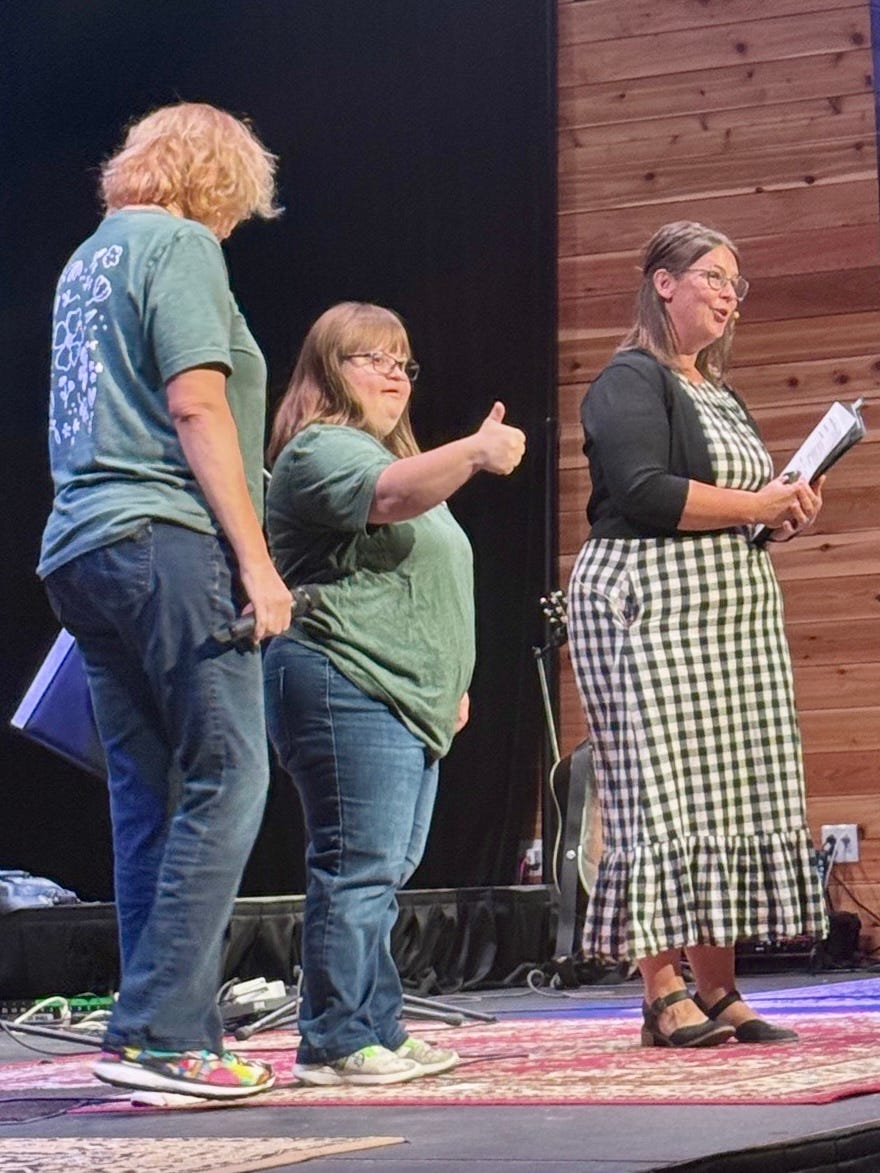
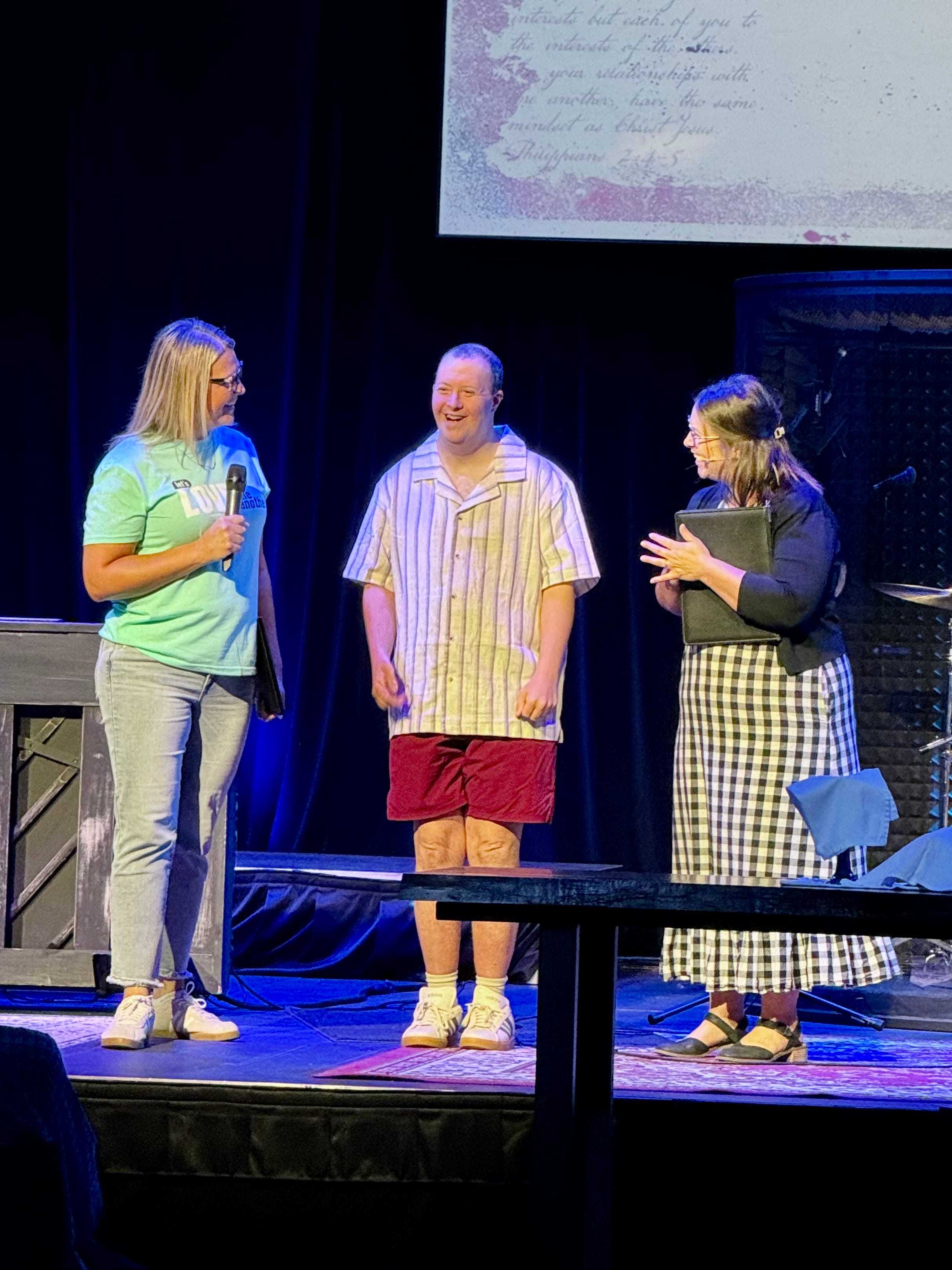
Love you guys.

Nice. And sometimes, "I don't know" is a complete answer. But I do like adding the pastoral part for when that's helpful.