
When the Unthinkable Stops Being Unthinkable
On truth, trust, and the slow fracture of a democracy
I had a different essay ready to go but I couldn’t stop thinking about what happened last Saturday night, and I’ve learned that when something won’t leave you alone, that’s usually the thing you’re supposed to write about.
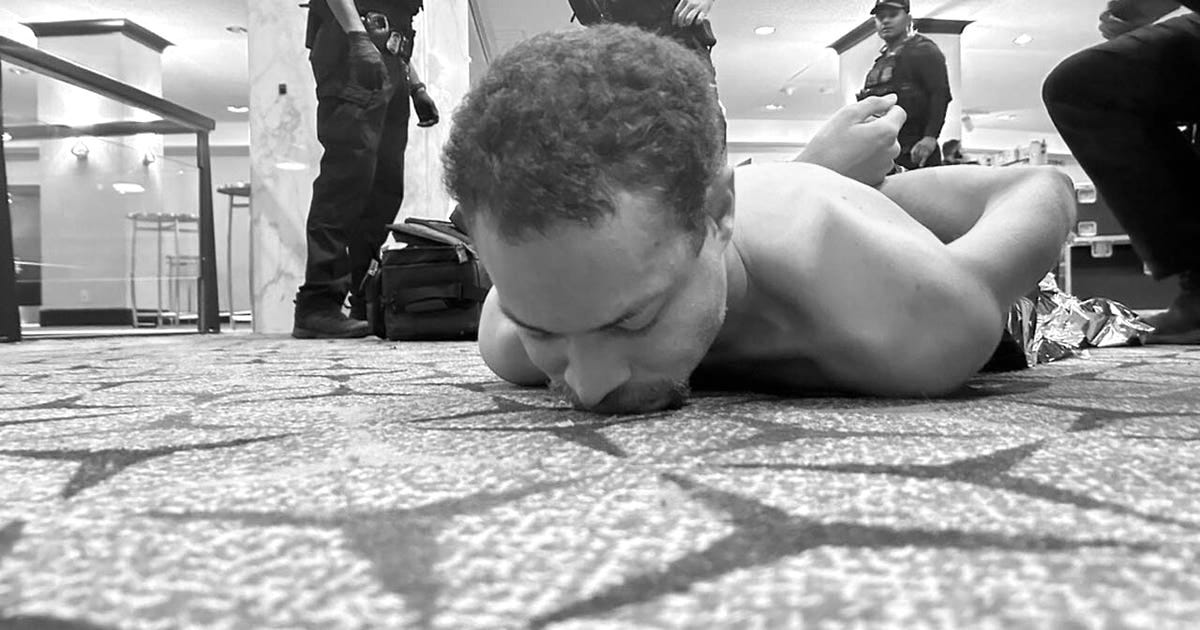
A man named Cole Allen, a 31-year-old teacher and engineer from Torrance, California, charged a security checkpoint at the White House Correspondents’ Dinner armed with a shotgun, a handgun, and multiple knives, apparently targeting officials in the Trump administration. A Secret Service officer was struck by at least one round but was protected by a bulletproof vest and is expected to be okay. Nobody died, the suspect is in custody, and by every measurable standard, the security apparatus worked.
The Thought That Scares Me More Than the Shooting
But here’s the thing I keep circling back to. Within hours of the incident, people on social media (not fringe corners, but people I know, people whose judgment I generally trust) were already asking whether this was staged. They wondered if this was political theatre, or a manufactured villain for a moment that conveniently needed one.
Now, I want to be careful here, because I am not saying that’s true. The evidence points to a real person with a real grievance who made a genuinely evil choice. But what I am saying is that we now live in a country where the thought “was this staged?” is no longer absurd to a meaningful portion of the population.
That’s what years of trust erosion does to a culture. It changes what they’re capable of believing.
Before I say anything else, I want to say this plainly. Whatever your politics, whatever your grievances about this administration or any administration, what Cole Allen did was wrong. Charging toward a room full of people with a shotgun and knives is ridiculous. Rage is real and sometimes justified, and it is still not a reason to try to kill people. Violence doesn’t become righteous just because it’s aimed at people we despise, and anyone who tries to quietly cheer this or explain it away is doing something morally dangerous that I think they need to sit with. And I say that as someone who has plenty of my own grief and frustration about the direction of this country.
But Here’s What’s Also True
Some of us have been saying for years that this trajectory leads somewhere dark. Nobody predicted a California teacher charging a hotel security checkpoint with a manifesto and a 12-gauge, but the general shape of it, the fracturing, the radicalization, the collapse of shared reality, this has been visible for a long time to anyone willing to look.
When you treat truth as a rhetorical tool rather than a moral obligation, you lose the social fabric that holds disagreement inside some kind of livable tension.
The Washington Hilton, where Saturday’s dinner was held, is also the site where President Reagan was shot in 1981. American political violence has a long history, but there’s something different happening now, something that feels less like isolated eruptions and more like a culture that has genuinely lost its bearings about what’s real and what’s at stake.
The grief of watching that unfold is hard to describe. It’s not “I told you so” grief. It’s quieter than that. It’s the grief of someone who loved a thing and watched it get hollowed out slowly, and then one day looked up and couldn’t quite find it anymore.
The Prophetic Task Right Now
The Hebrew prophets were not popular people. They didn’t get speaking invitations or book deals. They said what was true when the people in power were actively invested in everyone pretending it wasn’t. That’s not a comfortable role. It’s also not optional for those of us who take the tradition seriously.
The prophetic task right now is not to have all the answers. It’s not to be the smartest person in the room about policy or to produce a perfect political program. It’s actually simpler and harder than that. It is to refuse to pretend we can’t see what we’re seeing. To keep saying, out loud, that democracy requires truth-tellers. That leaders who treat reality as something to be managed and shaped for political convenience are doing damage that outlasts their administrations.
That a country where half the population can’t agree on whether an event even happened is a country in serious trouble.
The church (the actual, historic, confessing church) has something to say in this moment because we are people who believe that truth is not a commodity. We believe the logos, the Word made flesh, is the ground of all reality, and it has consequences for how we live in public, how we speak about power, and how we refuse to normalize the slow death of honesty in our common life.
You don’t have to have perfect clarity right now. I don’t. But if something in you is unsettled right now, trust that. That unsettledness might be the most honest thing you’ve felt in a while.
If this resonated with you, consider becoming a paid subscriber to Becoming Mainline. Your support keeps this work possible.


Amen, Brother.
Thank you Beau for bringing clarity to a crazy America.