


Hey friends,
I spent a good chunk of last weekend at a UMC Candidacy Summit. This is a weekend long virtual gathering where the conference staff helps pastoral candidates explore and discern their call to pastoral ministry. Now, I have been a pastor for a long time. I have preached hundreds of sermons, and officiated dozens of funerals and weddings. And there I was sitting on a zoom call sharing my call to ministry story (which began 19 years ago).
The pathway to pastoral ministry in the UMC is a long road. You must be a member of a UMC for at least a year and then then once you start the process (depending on which route you take) it could be another year until they make it official. If I am being honest, there is a version of me from a few years back who would have found the whole thing a little insulting. “I already know how to do this”, or “Now you want me to jump through hoops for a piece of paper that says I am allowed to do the thing I have already given my life to?” But the me who showed up last weekend felt something I did not expect, and it caught me off guard. I felt grateful. Truly grateful. I felt like I was being handed a gift.
The Zoom Call
I visited with people from all over the Midwest, some of them young and bright-eyed and a little terrified, others coming in from other careers, a few of us further down the road or transferring in from other denominations. We went around and told pieces of our stories. Many of us had gotten lost, gotten hurt, talked ourselves out of it and back into it, and somehow found our way to a tradition that had a door propped open for us. It really was beautiful.
I have written a lot about leaving. This newsletter mostly exists because of the two years I spent in the wilderness after a decade of evangelical ministry. Lately I have been sitting with the other half of that story, the arriving. The quiet, undramatic, paperwork-heavy work of actually planting yourself somewhere new and saying out loud that you want to belong to it.
The Process Is the Point
Here is the thing I sat with after I got off the Zoom call on Saturday. The candidacy process is slow on purpose. There are mentors and interviews and forms and committees, and it takes as long as it takes.
I used to read all of that as bureaucracy. Now I see it as care.
A tradition that makes you take your time before it hands you over to a congregation is a tradition that takes both you and the people seriously. Nobody is going to rush me into pastoral ministry on the strength of charisma and a good story. And that’s a good thing. That was pretty much the whole game in the world I came from, and I watched it wreck more than a few good people.
So, I sat in those sessions as a candidate, fully aware of how strange it looked, and I let it be good. I let myself be a beginner again. There is a real freedom in handing yourself over to a process you trust. I have spent so much of my life being the one with the answers, the one expected to have it all figured out. Sitting on a call with people who were carrying their own questions, none of us pretending to have it nailed down, felt like the way of Jesus. It felt like home.
I am a candidate. After all these years, I am just beginning. And I cannot tell you how at home that makes me feel.
I look forward to sharing more of that journey with you.

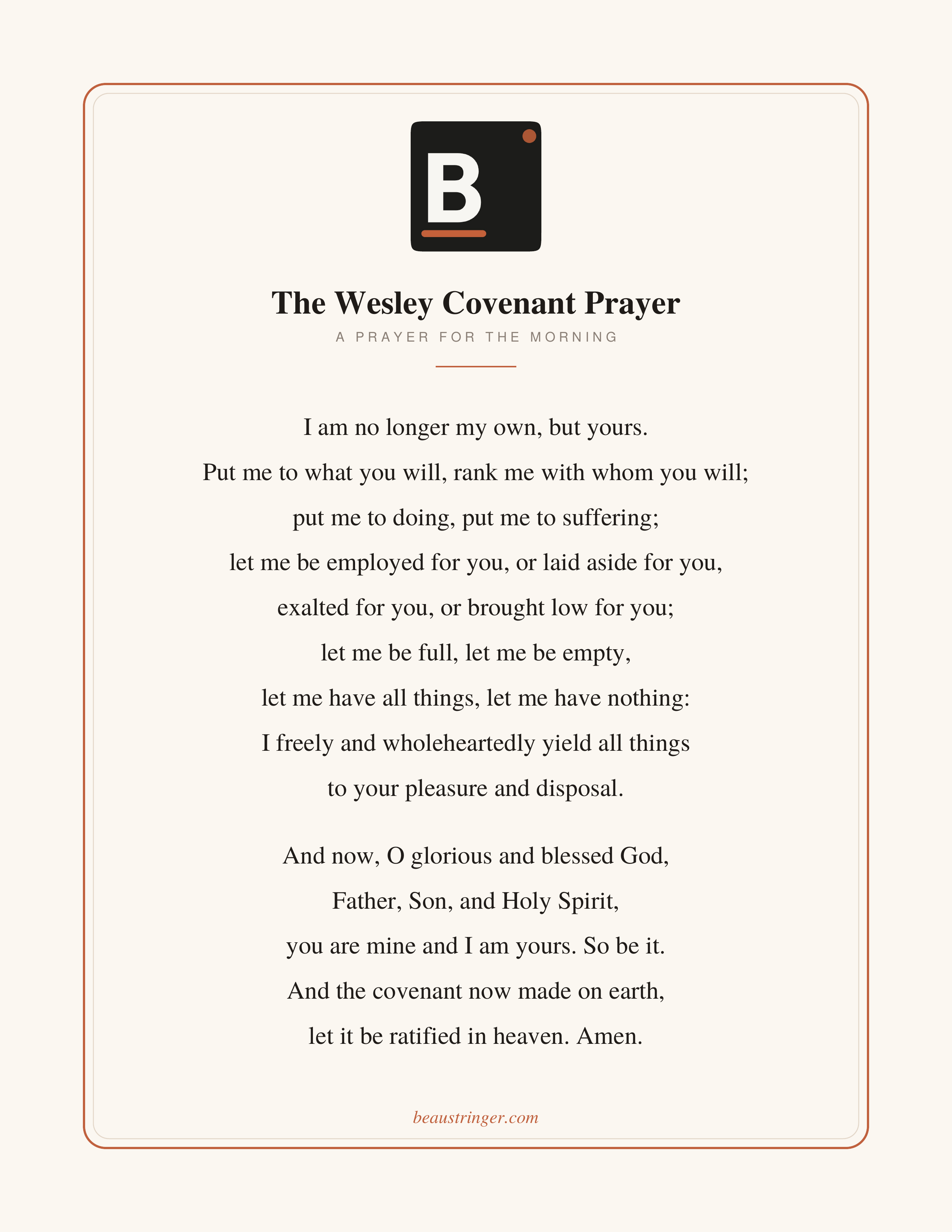
This week I want to put the Wesley Covenant Prayer in your hands. It is the prayer Methodists have prayed for generations when they want to hand their whole lives over to God. Try praying it first thing, before your feet hit the floor and the day starts making its demands.
I made a little card with it you can print and keep by your bed or tuck into whatever you carry around. You can download the .pdf below.


Richard Rohr has a talk on what he calls the Jesus Hermeneutic, and I am not exaggerating when I say it lines up with where I have landed on scripture better than anything I have come across in a long time. If you handed me a microphone and asked me to explain how I read the Bible now, I would just play you this.
The short version is that Rohr studies how Jesus himself read his own scriptures, and he notices that Jesus did not treat every verse as carrying the same weight. Jesus kept reaching for the texts that point where the whole story is heading, toward mercy and inclusion and justice, and he read everything else in that light.
If you have ever felt worn out trying to defend parts of the Bible that seem to cut against the heart of Jesus, this is going to feel like fresh air in your lungs.
Watch it, then save it and watch it again.

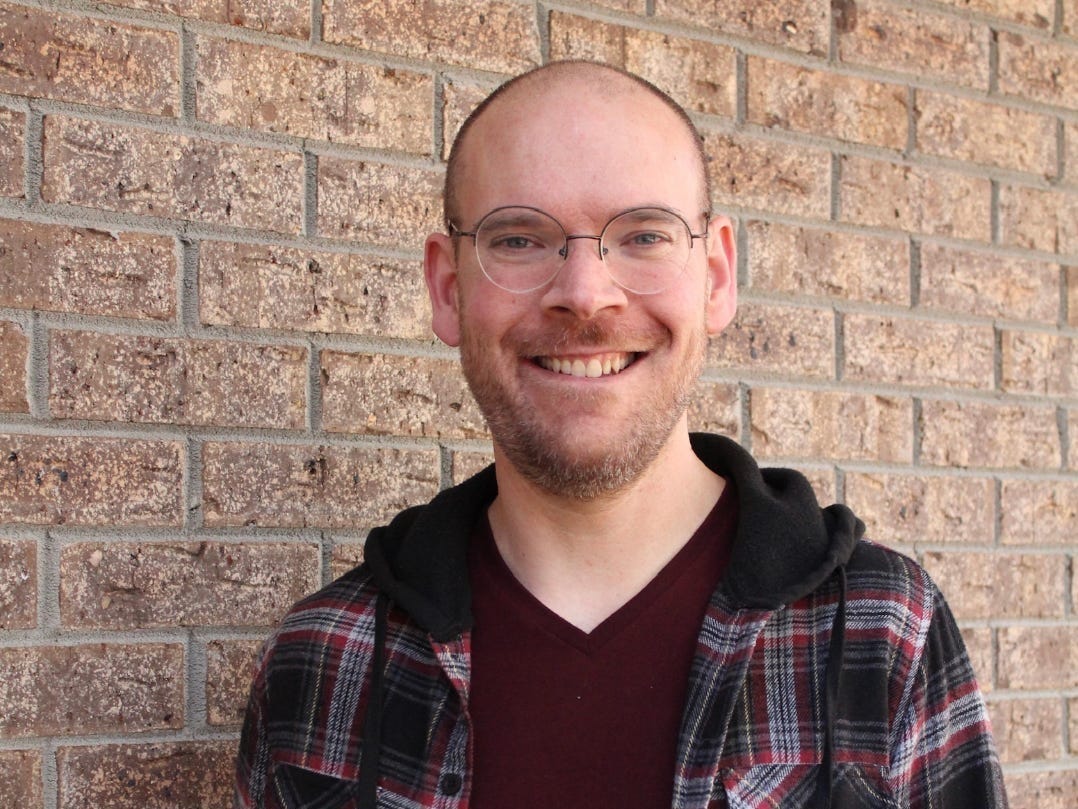
I got to meet the writer Aaron Hann in person this week over coffee, and it was one of those conversations that sends you home lighter than you showed up. He has a book coming out next fall as well, and hearing about it, and about how he actually does the daily work of writing, was exactly the encouragement I did not know I needed in the middle of my own book season. There is something about meeting an internet person in real life and finding out they are even better in three dimensions. You can see what he is up to here.
Before I go, I want to say something I do not say nearly enough. A lot of you found your way here carrying wounds from places that demanded so much of you and left you running on empty, and the fact that you keep letting me into your inbox every week is not a small thing to me. You are the reason this exists. You are the people I picture when I sit down to write, the friends I am actually talking to (yes, even when I am rambling on about Methodist processes), and getting to walk this stretch of road with you while I learn how to be a pastor all over again is honestly one of the great gifts of my life right now.
For those of you who have the room and want to help carry the work forward, becoming a paid subscriber is the simplest way to do it, and it lets me keep showing up here. No pressure and no guilt, ever.
I love you and there is nothing you can do about it.

Thanks for this. I’m in the years-long process of becoming an Episcopal priest — at 67 — entering seminary full time this fall. I too chafed at first at what seemed to be the unnecessarily prolonged process. Be careful, don’t rush, sure, but years? While I do think there are ways the process could activate the candidate more quickly (as clinical pastoral education does), the care and carefulness is real. Already I’m a different person I was from the start and I will be different from the me of today when I’m, God willing, one day ordained.
Welcome to the UMC! Hope you find a home here. We need people like you.