
Pentecost Says Women Can Preach. Al Mohler Says Otherwise.
The story in Acts 2 is one of the most fascinating passages in all of Scripture. The Spirit fell on all of them. Men and women both. People spoke and people heard. Then, Peter stood up and quoted the prophet Joel: In the last days, God says, I will pour out my Spirit on all people. Your sons and daughters will prophesy. Notice, Paul doesn’t say “daughters, except in official capacities” or “daughters, pending a constitutional amendment.” Just daughters.
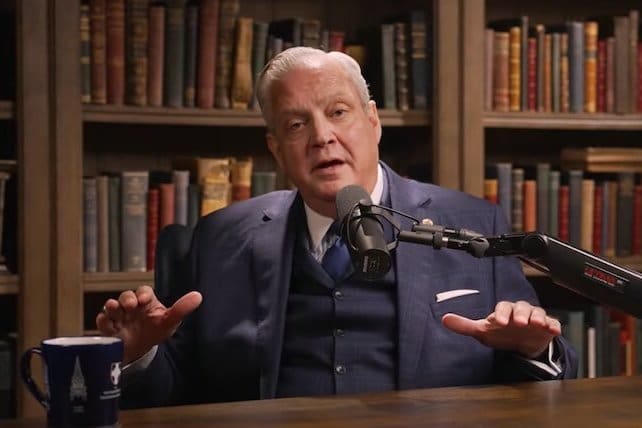
This week, as churches across the world were preparing their Pentecost sermons, Al Mohler announced he will propose a new amendment to the SBC constitution at the annual meeting in Orlando next month. The motion would add language to Article 3, Paragraph 1 of the SBC constitution specifying that a cooperating Southern Baptist church “does not act to affirm, appoint, or endorse a woman serving in the office or function of a pastor/elder/overseer, such as preaching to the assembled congregation.” In other words, a woman standing at a pulpit and opening a Bible on a Sunday morning would be grounds for a church to lose its SBC standing.
I want to sit with that for a second. Let that sink in.
The very act Peter described the Spirit enabling (prophesying, speaking, declaring the good news) would be a disqualifying offense.
The Timing Is Rich
I don’t think timing is always meaningful. Sometimes things just happen when they happen. But there is something worth noticing when the nation’s largest protestant denomination moves to formally and constitutionally restrict women from preaching the same week the whole church is supposed to be remembering the moment God gave women the Spirit and the voice to do exactly that.
This raises a genuine theological question that I think deserves to be asked out loud: What do we do when the institution and the Spirit seem to be moving in different directions?
Mohler has always been a staunch advocate for male-only pastoral roles, and key SBC figures, including both candidates for SBC president, immediately endorsed his proposal. The speed of that endorsement tells you something. It tells you that this isn’t some kind of fringe position within that world. And I understand that. I grew up in that world. I pastored in an adjacent theological zip code for a long time. I know how the argument goes, I know the texts they lean on, and I know how convinced and sincere most of these guys are. But sincerity doesn’t settle the question. And critics within the SBC itself are already pointing out the inconsistency. The same voices who argued the SBC had no authority to interfere in local church autonomy when it came to creating a database of clergy abusers are now proposing to amend the constitution to dictate who may or may not lead those same autonomous churches. At some point, you have to name what you’re actually protecting.
What Pentecost Actually Claims
But here’s what I keep coming back to. Pentecost is a claim. It’s a declaration that the old boundary markers (the ones that determined who was in and who was out, who could speak and who had to be quiet, or who carried authority and who carried none) those markers were being retired. The Spirit was the announcement of a new world breaking in. And who are we to say that the Spirit got it wrong? Paul would later write that in Christ there is no Jew or Greek, slave or free, male and female. He was describing a community that had been restructured from the inside out by the presence of God.
The New Testament, read carefully and in its full historical context, points toward the full inclusion of women in the life and leadership of the church. And this what the earliest communities actually practiced before centuries of hierarchy reasserted themselves. People assume this is some kind of liberal reading, but I would argue that’s a deeply conservative one, in the truest sense of the word. It’s trying to conserve what was actually there.
The Question Nobody’s Asking
But what I find myself wanting to ask is simpler than all of this, and maybe harder. How many women have felt the pull of a call (the kind that wakes you up at night, or the kind that makes you lean forward when someone’s in pain and you somehow know what to say, or the kind that has been confirmed by people around you who have watched you love and lead and serve) and have spent years being told that call was either mistaken or illegitimate? How many of those women are sitting in SBC churches right now, watching this news, and feeling something close to grief? Whatever your hermeneutical convictions are, I don’t think you can look at those women and feel good about the world you’re building.
At the end of the day, there’s a version of theological fidelity that is just gatekeeping with better vocabulary.
I’m not saying that’s always what’s happening, but I am saying that when the fruit of a theological position is the systematic silencing of people who are clearly gifted and clearly called (AKA Beth Moore), that’s worth examining. Jesus said you’ll know the tree by its fruit and Pentecost told us the Spirit moves where the Spirit moves, without asking anyone’s permission first.
The convention meets in Orlando next month and the Spirit, as far as I can tell, is not waiting for the vote.
If this resonated with you, consider becoming a paid subscriber. It's how this community stays alive and how I get to keep writing about the things that actually matter to people navigating faith in complicated times.


"Whatever your hermeneutical convictions are, I don’t think you can look at those women and feel good about the world you’re building."
Frankly, I've NEVER felt "good" about "the world" ANY of the Protestant sects have built for themselves.
I just don’t understand why that’s the hill the SBC wants to die on. There are so many more pressing issues, and this feels like a diversion to me