


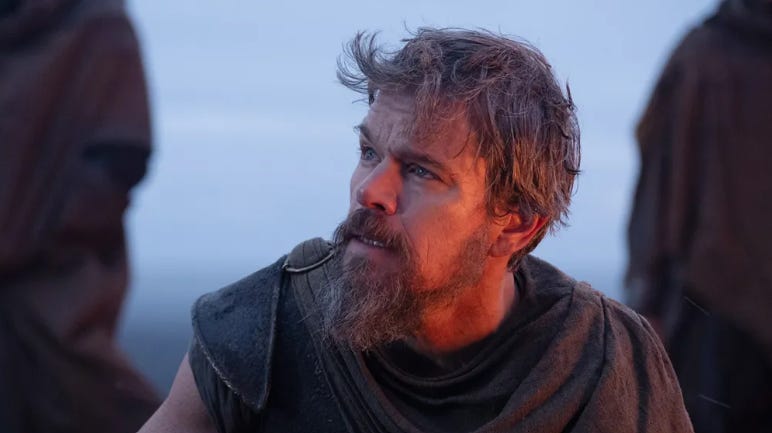
Over the past couple of weeks, so many of my friends have spent 3 hours in the dark watching Matt Damon get chased by a Cyclops and cursed by a Sea God. While I haven’t seen the movie yet, it’s definitely on my list. Christopher Nolan’s The Odyssey has been out for a few weeks now and I have talked about it with probably a dozen people. And here is the thing—not one of them demanded proof that Poseidon is real before they’d let themselves enjoy the movie. They just watched the movie, felt the weight of it, and that was that.
I get a very different conversation almost every week doing the work I do online. Somebody will list the flood, Sodom and Gomorrah, the command to wipe out Canaan, or the firstborn sons of Egypt, and ask how I could still believe in a God who did all of those things. While I understand the heart behind the question, I think Nolan’s movie gives us one of the clearest ways to explain why.
We already know how to read this
Did you know there were other flood stories in the ancient world besides Genesis? The Epic of Gilgamesh has one, and the older Atrahasis Epic has one too. Ancient writers shared a toolkit of images for telling stories about a broken world starting over, and Genesis uses that same toolkit while pointing it somewhere different. Genesis points it toward a God who grieves before he judges and hangs a rainbow as a promise. Nobody sitting around a campfire in the ancient world heard that story and mistook it for a weather report.
Homer’s first audience didn’t need Poseidon to be a real, grudge holding God to understand what the Odyssey was telling them about pride and grief and a man gone twenty years from home. They knew the story was a container built to carry truth, and the container wasn’t the point.
We still know how to read that way. We just seem to forget it the second the book in question is the Bible. And every ancient author suddenly has to pass as a modern journalist, or it gets dismissed.
Now, part of why we do this to the Bible is because we use the phrase “God’s word.” People hear that assume it can only mean one thing. Every sentence has to function like a court transcript or the whole book stops counting as inspired. But that assumption is younger than it feels. Origen was already reading Genesis for meaning rather than mechanics back in the 3rd century. Augustine spent pages warning Christians not to embarrass themselves by claiming Scripture teaches bad science, and he didn’t even read the 6 days of creation as 6 literal days. Again, this is a fairly new issue.
The lens that actually holds
None of this makes every hard story dissolve into a metaphor. That’s not what I am saying. Canaan is still Canaan, and I won’t pretend a tidy paragraph fixes that. But what holds it together for me is a lens that I didn’t invent. Scholars and authors I love have been arguing for years that Jesus is the fullest picture of what God is actually like, and everything written before him gets read through him, not the other way around. Hebrews opens with almost the same idea, that God once spoke in pieces through the prophets and has now spoken completely through a Son. The clearest picture of God is a man who touched lepers, forgave the people killing him, and said the last would be first. That picture gets to shape how I read everything that came before it. It doesn’t erase the hard chapters, but it does tell me which direction to read them in.
Where that leaves you
You don’t have to defend every line of the Old Testament like a lawyer stuck with a bad case. You don’t have to throw the whole library out either. You get to read these ancient texts the same way you already read ancient texts. You get to read them with curiosity and not a magnifying glass looking for a lie. Let Jesus be the lens instead of making every verse carry equal weight on its own.
Next time somebody stacks up the list and asks how you can still believe, you can tell them that you are reading an ancient library the way ancient libraries are meant to be read.

Take a twenty minute walk this week with no phone, no podcast, and no music. Just you and the boredom.
I heard Arthur Brooks talk about this at the Global Leadership Summit last week and it really stuck with me. His point was that we’ve basically solved the boredom problem with our phones, and that solving it came at a real cost. The parts of your brain responsible for big picture thinking, meaning, imagination, and the future, only switch on when you let yourself get bored enough to need them.
So, take a walk without the noise. Let your mind get restless and a little uncomfortable.

If you want a lighter companion to Nolan's The Odyssey, go watch O Brother, Where Art Thou. It’s such a good movie.
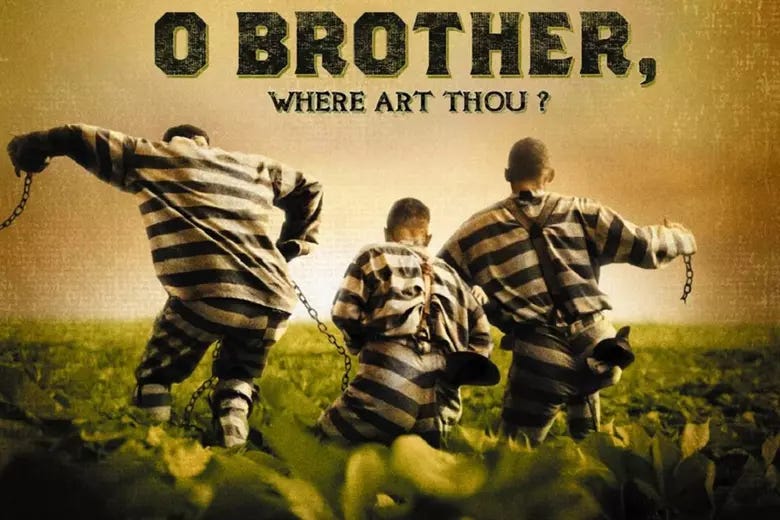
The Coen brothers put "Based Upon 'The Odyssey' by Homer" right in the opening credits, and George Clooney spends the whole movie as a man named Ulysses trying to get home to a town called Ithaca. There's a cyclops played by John Goodman and a trio of sirens singing men into trouble by a riverbank. The best part is that the Coens have joked for years they never actually read the poem going in, and leaned on Tim Blake Nelson, the one cast member who had, to help them line the story up with Homer as they went. It is hilarious and I also love the soundtrack.

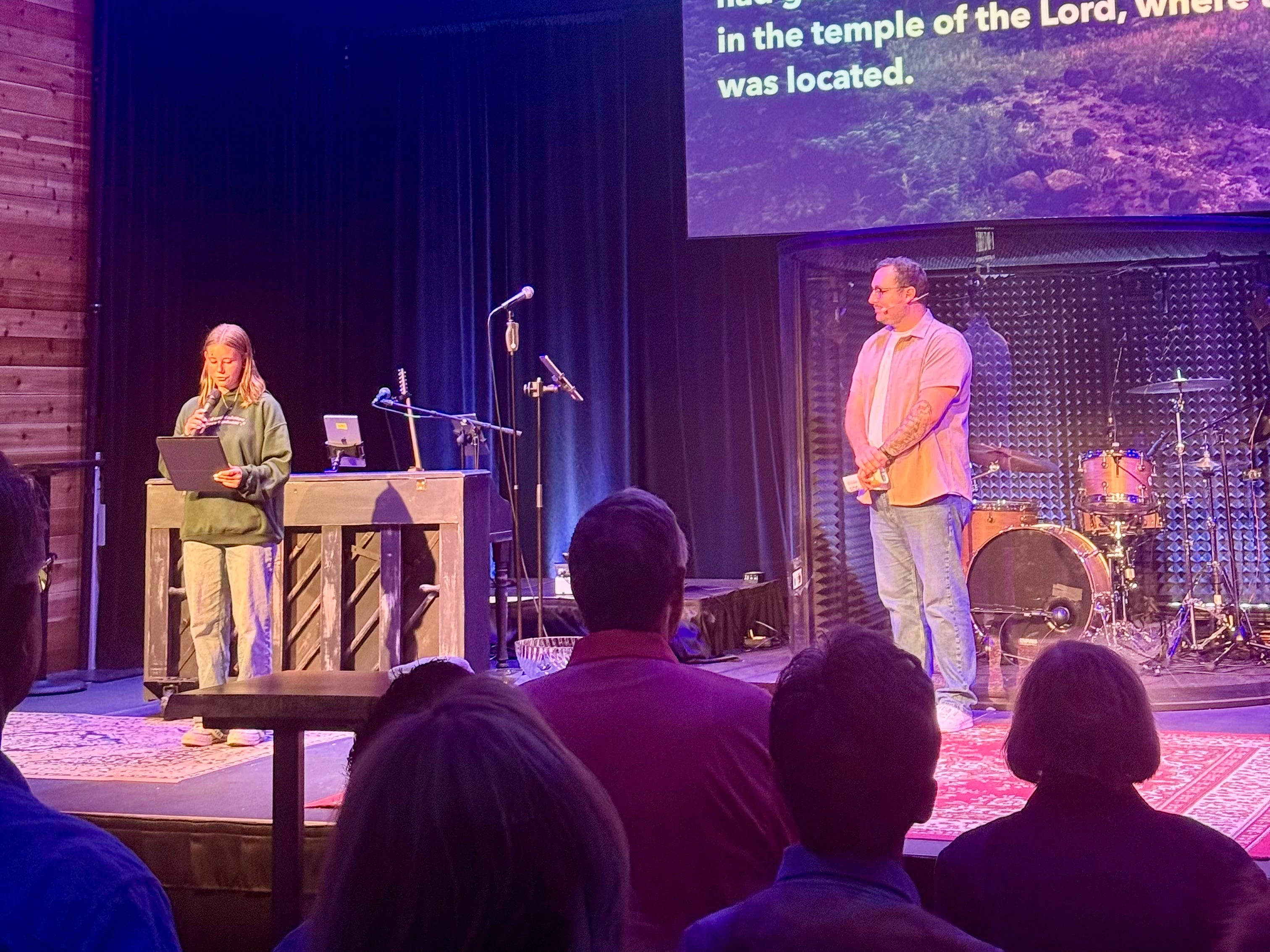
Last weekend was Student Ministry Sunday at Resurrection Downtown and my daughter read Scripture at one of the services. I got to share the stage with her while she did it. I am so grateful for a church that cares deeply about the next generation.
See you next week.

I’d love Oh brother Where Art Thou and now I’ll have to re-watch it. ☺️
You don’t have to defend every line of the Old Testament like a lawyer stuck with a bad case.
That's great! Thanks.