
My Son Doesn't Know What He Believes. And That's Okay.
Hey friends,
Parenting teenagers is an adventure. Some days it feels like we are sailing on smooth water, but most days it feels like we are hanging on for dear life in a paddle boat being tossed about in the open sea. Don’t get me wrong, I love the ocean. I love a good adventure. But navigating the waters of parenting can feel isolating and insurmountable at times. That is precisely why I felt led to share with you what’s been going on in our world.
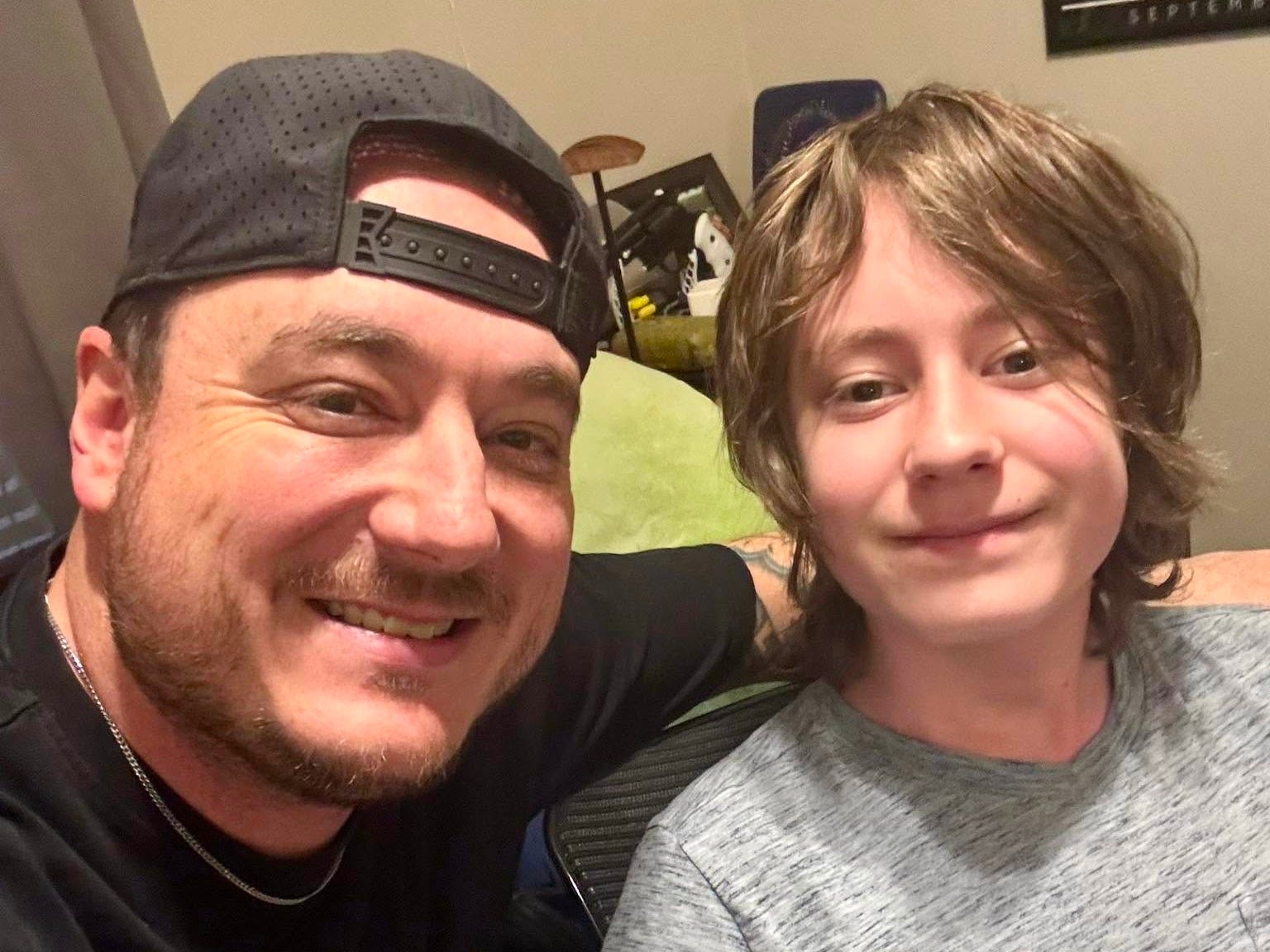
My son Luke is 14 and he just completed the 8th grade. He’s got this way of asking questions about things that most people just accept, and he does it not to be difficult but because he actually wants to know. He’s been doing it since he could talk. He’s a lot like his dad in that way, which is probably why I wasn’t surprised when he told me he didn’t want to get confirmed this year.
For those of you who didn’t grow up Methodist, confirmation is basically the moment the church turns to a teenager and asks: so what do you think? It’s the church saying okay, you’re old enough now, do you want to claim this faith for yourself? Depending on your faith tradition there’s usually a yearlong class, some conversations with a pastor or mentor, and then a Sunday where the students stand up front and recite the apostle’s creed or read a faith statement and say yes in front of the whole congregation. It’s a meaningful thing when it’s real, but Luke didn’t feel like it was real for him yet. So he said so. And I think for a lot of people that would have been disappointing, but I have to tell you—I was so stinkin proud of him.
I have been there too. There have been seasons in my life that I didn’t really know what I believed or what I was doing or whether any of it was true anymore. I didn’t ever walk away from faith completely, but I had to find it again in a more honest form, and that process was uncomfortable and slow and I couldn’t have stood up in front of anyone during that time and made declarations with a straight face. I know what it feels like to need more time. I know what it feels like to have the questions be louder than the answers. So, when Luke said he wasn’t ready, I felt like I was looking at a younger version of myself.
What my wife and I told him is that our love for him has nothing to do with whether he gets confirmed or becomes a Christian or ends up in a church or something else entirely.
My love for him is not a reward for correct belief.
It just is. It doesn’t have conditions attached to it and it’s not going anywhere based on what he decides to do with God.
I think a lot of parents feel this pressure around their kids’ faith, like the kids are supposed to perform belief or at least look like they believe because it reflects on the family somehow. I’ve felt that. I know it’s real. But I’ve decided I just don’t care about it. I would rather him be honest than play pretend. He could have just gone along with it and smiled on a Sunday morning, and nobody would have known the difference. Instead, he told the truth about where he is. At fourteen. I know he is my kid, but I sincerely think that’s incredible.
I’ve been a pastor long enough to know that the God I believe in is not running a performance review on teenagers’ confirmation classes. The God who shows up all over scripture is the one who runs toward the returning son before the speech even starts, who searches the whole house for one lost coin, who leaves ninety-nine sheep to go find the one that wandered off. That is not the posture of someone waiting for you to have your theology sorted before they’ll sit with you.
Luke is somewhere in the middle of his own story. And honestly, most of us are.
John Wesley, the guy Methodism is actually named after, had his own famous heart-warming moment of assurance only after years of trying and failing and crossing an ocean and coming back more confused than when he left. The tradition has always had room for the person who needs more time because it was built by people who needed more time.
I don’t know where Luke will land, and he doesn’t either. And that’s okay.
This week I want to invite you to say maybe more often, especially about people.
Maybe your teenager isn’t being disrespectful. Maybe they’re carrying something you don’t know about yet. Maybe the friend who went quiet isn’t pulling away. Maybe the coworker who seems checked out is holding something heavy at home. Maybe the person who skipped church this week isn’t drifting, maybe they’re just tired. Maybe the neighbor who didn’t wave didn’t see you.
We spend so much energy building stories about people with almost no information, and those stories almost always assume the worst.
What if you just practiced assuming the most generous version instead?
So this week, when you’re about to land on a conclusion about someone, just pause. Say maybe. And see what that opens up.
This week I spent some time reflecting on which books had the most impact on me and one of those was The Divine Conspiracy by Dallas Willard.
I read this book over 10 years ago, but I think about it almost every day. Willard’s argument that the Sermon on the Mount is an invitation into life available right now, and not some bar that is meant to crush you reoriented something fundamental for me. I can’t recommend Dallas Willard’s writings enough.
It’s Pride Month and I thought I would share with you a DM I received from someone recently that really touched my heart. Ryan said this:
Hello Beau!
I’m a recent subscriber but wanted to let you know how much I appreciate your message. I grew up queer in Kentucky, surrounded by a Christian community that seemed so joyful, except that I was somehow even as a child desperately aware they didn’t want my kind there.
It was very isolating. All friendships had to be managed, all identity filtered. Some of my best friendships were from those years and none of those people knew the real me because I was too afraid of losing the few friendships I did have to bigotry I didn’t understand.
Fast forward 20 years and the accumulated weight of that trauma of the closet caught up with me, sent me into a mental health crisis I barely survived. The irony is a huge part of my survival were some pretty literal brushes with Jesus Christ that happened in conversations with strangers, the universe and in a couple of powerful dreams. To me, the message was clear and it saved me.
I find myself terrified to speak of this part of my journey, terrified to turn to any Christian organization for guidance, because I don’t want to have to reactivate the part of me that filters out who I am just to share what I believe is an uplifting story because of who I am.
Anyhow, I just wanted to say I find your perspective healing in a powerful and wonderful way. Each time I come across your notes, I feel a little less like I don’t belong there.
The little lonely queer boy inside me who will never get to meet kids his age as himself thanks you. I thank you. 🙏
Isn’t that the sweetest message? Gosh, that brought me so much joy. What a privilege it is to share God’s immense love.
Keep becoming,
-Beau
This newsletter is free to read and always will be, but if it's been worth something to you, a paid subscription is the best way to say so. You will get early book content, and everything that doesn't make it into the free essays. It's a few dollars a month and it directly funds this work.


Kudos to you and your wife for supporting your son. I was forced to be confirmed (well, shamed and bribed into going through with it) when I knew perfectly well I would not remain with that church for the rest of my life, and I haven't. When I was a priest in the Episcopal church I used to tell my congregation that no one should be confirmed under the age of 30. The prayer book says confirmation is a "mature, adult affirmation of one's faith." I don't know many 14-year-olds who meet that criteria.
Wish my dad had been that approachable! I was raised Catholic and it didn’t even occur to me to not be confirmed b/c I knew what his response would be. I loved God but was unsure about the “institution”
So now having tried out nearly every denomination, and spending years in some of them, I’m finally settling in to ask the questions I needed to as a teenager. Better late than never, eh? My faith in God is strong. It’s the doctrines I struggle with.