
Fasting in a Culture of Consumption
Part 2 of the Lenten Series: The Season We’d Rather Skip
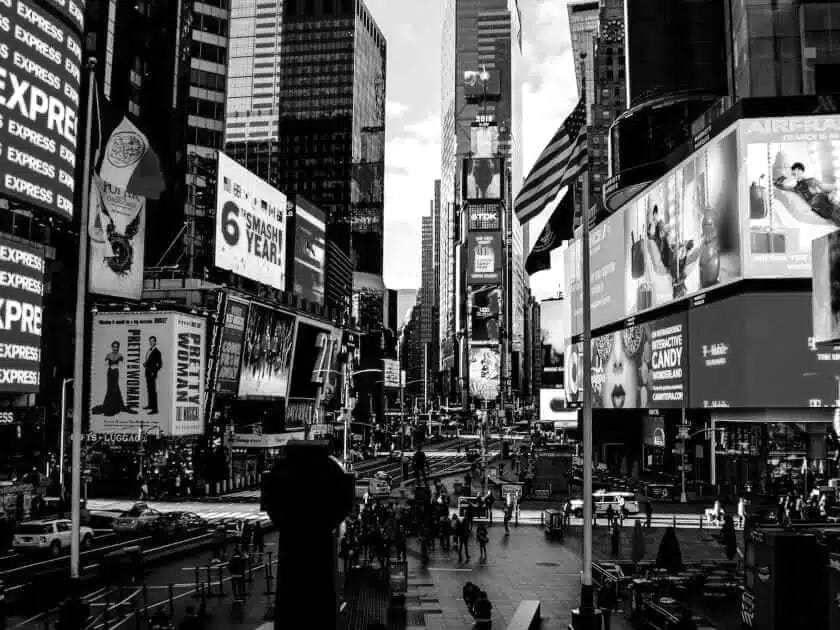
Americans are the most consumed people in the history of the world. And I don’t mean that in some finger-wagging, shame-based kind of way. I mean it as an observation that should stop us in our tracks if we thought about it for more than three seconds. We are swimming in stuff. Our closets are full. Our pantries are full. Our streaming queues are full. Our inboxes are full. Our calendars are full. Our feeds are an infinite scroll of content we didn’t ask for and can’t stop consuming. We have more access to more everything than any group of humans who have ever lived on this planet and somehow the anxiety and depression numbers keep climbing.
There’s a reason for that. Consumption promises satisfaction and then immediately creates more hunger. That’s the engine. That’s how it works. You buy the thing, watch the thing, eat the thing, scroll the thing, and for about fifteen minutes you feel something. Then the emptiness comes back louder than before. So you reach for the next thing. And the next. The entire economy depends on you never feeling like you have enough. The whole machine breaks down if you ever sit still long enough to realize that you’re full and have been for a while.
And the church has not been immune. We’ve built a Christian consumption industry that would have baffled the desert fathers. Conferences, books, podcasts, apps, subscription boxes, merch. The faith has been packaged into content to be consumed and we’ve confused consuming Christian products with actual formation. You can listen to worship music twelve hours a day and never once sit in silence long enough to hear God say something you didn’t want to hear.
Making Room
Every January for as long as I can remember I’ve also fasted the first two days of the year. No food. Just water and quiet and whatever God might want to say about the year ahead. I started doing this because I noticed something about myself that I didn’t love. By the end of every year I was so full of noise and opinions and plans and obligations that I couldn’t hear anything underneath all of it. The signal was completely buried under the static. And I found that the only way to recover it was to empty out. To stop taking things in for a little while and just sit in the hunger.
Those two days are never fun. I’m not going to romanticize it. By the afternoon of day one I’m irritable and distracted and thinking about tacos and chicken wings. But somewhere in the middle of day two something usually shifts. The noise dies down. The mental chatter thins out. And there’s this space that opens up that wasn’t available to me twenty-four hours earlier because I had filled every square inch of it with something.
That’s what fasting is actually about. It’s not punishment. It’s not a willpower test. It’s not a way to twist God’s arm. Fasting is the practice of making room. It’s the radical act of saying I have enough, I’ve taken in enough, and I need to stop for a minute so I can remember what matters.
The God of Empty Spaces
You don’t know what has a grip on you until you try to let go of it. Skip a meal and watch what happens to your mood. Leave your phone in another room for an afternoon and notice the low-grade panic that creeps in. Turn off the podcast on your commute and just drive in silence and see how long it takes before the quiet becomes unbearable. We are a people who have lost the ability to be empty.
And the problem with that is not just physical or psychological. It’s spiritual. Because the entire biblical story is built on the idea that God fills what is empty. Mary’s empty womb. The empty tomb. The disciples’ empty nets. God has always done his most profound work in the places where there’s nothing left but need. And if we never let ourselves get empty then we are essentially telling God there’s no room at the inn. Again.
Ronald Rolheiser writes that “we need to be overwhelmed, to be in over our heads, to be in a situation where our own resources are inadequate” because that’s where faith actually begins. I think he’s right. And I think that’s why fasting has survived for thousands of years as a spiritual practice. Because we need to remember what it feels like to need something we can’t provide for ourselves.
Lent invites us to fast. Not as a diet plan. Not as a performative spiritual flex. But as an honest admission that we’ve been consuming our way through life and it’s not working. The hunger is not the enemy. The hunger is the invitation. It’s the space where God’s voice has room to land.
Try This
This week, pick one thing to fast from. Pick one thing that has a grip on you and set it down for seven days. Maybe it’s the scroll before bed. Maybe it’s the noise in the car. Maybe it’s the constant snacking that fills every gap in your afternoon. Whatever it is, let yourself feel the emptiness that shows up when it’s gone. Don’t fill it with something else. Just sit in it. You might be surprised what you hear when you finally stop consuming long enough to listen.


