
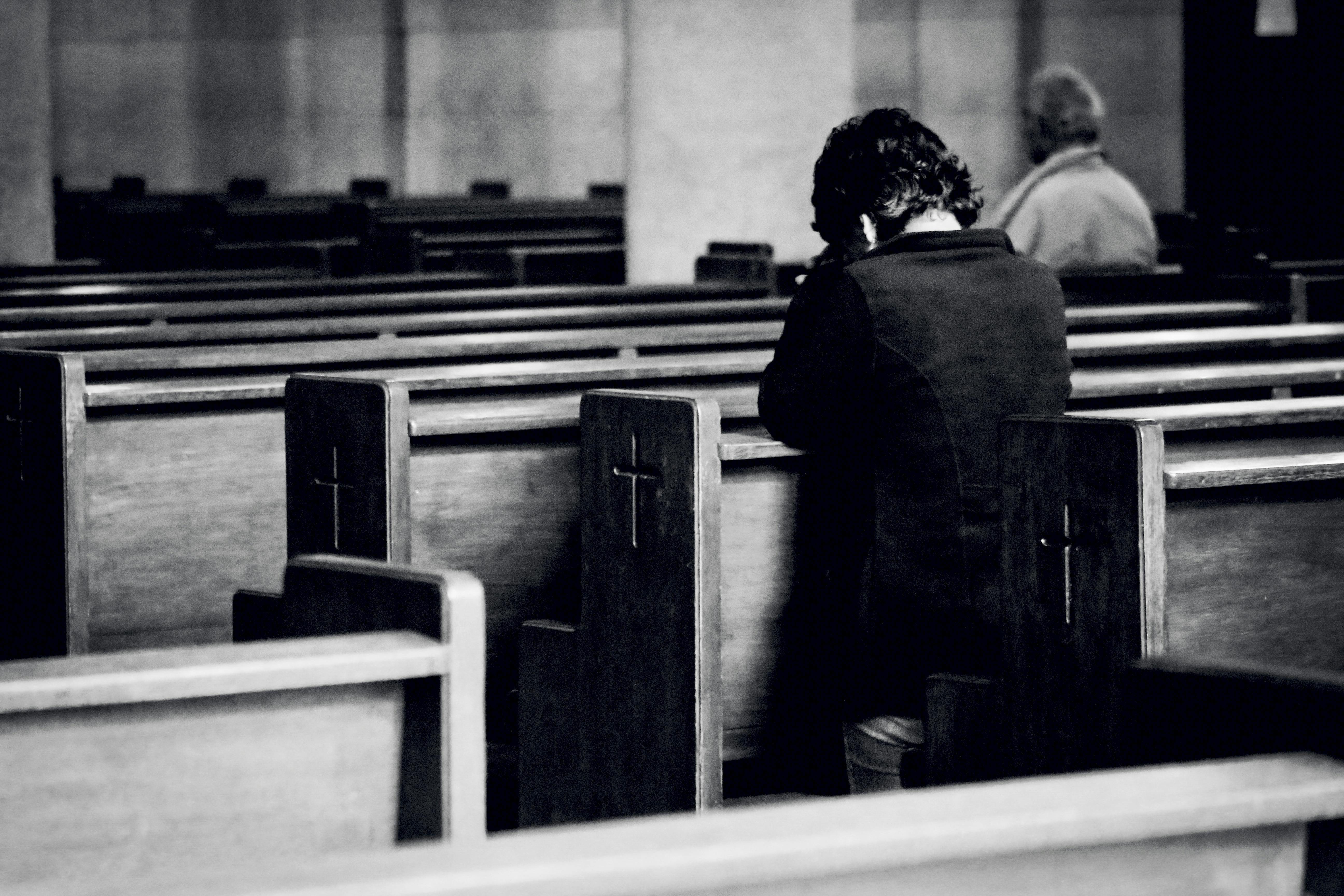
Confession in a Culture Allergic to Vulnerability
Part 3 of the Lenten Series: The Season We'd Rather Skip
Nobody apologizes anymore. I don’t mean the Instagram story apology or the Notes app statement crafted by a publicist or the tearful press conference where someone reads from a script about how they’re going to “do the work” and then disappears for six weeks before launching a comeback tour. I mean actual apology. The kind where a person looks another person in the eye and says I was wrong and I’m sorry and I have no excuse. That kind of apology has become so rare in American public life that when it actually happens it makes the news. We literally do not know what to do when someone tells the truth about themselves without being forced into it.
I mean you know this. Watch what happens every time a politician or public figure gets caught in a lie or a scandal or a moral failure. The playbook is so predictable at this point. First comes the denial. Then comes the deflection. Then comes the counterattack where somehow the person who did the wrong thing becomes the victim and the people who pointed it out become the villains. Then come the surrogates flooding every cable news show and social media platform to rewrite the story in real time. And if enough time passes and enough noise gets generated the whole thing just fades into the background until the next cycle starts. At no point in this process does anyone ever simply say I was wrong.
We’ve built an entire culture around the avoidance of confession, and it’s killing us.
The Email I Didn’t Want to Send
A few years into ministry I was living with a secret that was eating me alive. I had been addicted to pornography for years. Through college, and through the early days of pastoral ministry. It was the thing I carried with me into every sermon and every prayer and every leadership meeting. I knew it was there. God knew it was there. And I had become an expert at making sure nobody else ever found out.
I was good at hiding it. That’s what shame does. It teaches you to perform wholeness while you’re falling apart on the inside. And the evangelical world I grew up in made that performance easy because the unspoken rule was that leaders don’t struggle with things like this. Or if they do, they certainly don’t talk about it. You white-knuckle your way through it privately and you pray harder and you install accountability software and you never ever let anyone see the real mess because the moment you do your ministry is over.
One night I couldn’t carry it anymore. I was laying in bed and on my phone I typed out an email to our church leadership team. I don’t remember exactly what I wrote. I just remember that my hands were shaking and I felt like I was going to throw up and every instinct in my body was screaming at me to delete the draft and go to bed and keep pretending. I hit send instead.
The next day I sat in a room with those leaders and told them everything. And what happened next is the part I still can’t talk about without getting emotional. They didn’t shame me. They didn’t fire me. They didn’t quote scripture at me or give me a program to follow or tell me to get it together. They loved me. They prayed for me. They asked me what I needed. They helped me get treatment and enrolled into a recovery program. They walked with me into a season of healing that I never would have found if I had kept hiding.
That meeting is one of the most important things that has ever happened to me. And it only happened because I chose confession.
Why We Can’t Say It
There’s a reason vulnerability feels so dangerous right now. We’ve watched too many people get destroyed for admitting weakness. The internet has no grace. Social media has no statute of limitations. One honest moment can be screenshotted and decontextualized and weaponized and turned into the only thing anyone ever knows about you. So we learn to curate. We learn to manage. We learn to project strength and certainty and confidence at all times because the cost of honesty feels unsurvivable.
And the church has contributed to this. How many pastors have been removed not because they confessed but because they got caught? How many church cultures have made it clear through a thousand unspoken signals that vulnerability is acceptable in the congregation but never in the leadership? We say we believe in grace and then we build institutions that punish honesty. We preach a gospel of forgiveness on Sunday and run our organizations like the confession will be used against you in court on Monday.
Now I want to be careful here because I am not talking about abuse. I am not talking about pastors who exploit their power or harm the people in their care or cross lines that should never be crossed. When that happens there should be swift and serious consequences and the protection of victims should always come first. That’s not confession territory. That’s accountability territory and the church has been far too slow to recognize the difference.
What I am talking about is the ordinary brokenness that every human being carries. The struggles and failures and secret battles that don’t involve harming others but do involve the slow corrosion of carrying shame alone in the dark because you’ve been told that leaders aren’t allowed to be broken.
James 5:16 says “confess your sins to each other and pray for each other so that you may be healed.” Not so that you may be managed. Not so that you may be evaluated and placed on a performance improvement plan. So that you may be healed. There is something that happens in the human soul when you stop hiding and start telling the truth that cannot happen any other way. I know this because I’ve lived it.
The Bravest Thing You’ll Ever Do
Henri Nouwen wrote that “the great illusion of leadership is to think that others can be led out of the desert by someone who has never been there.” I think about that line constantly because it obliterates the performance model of faith that so many of us were raised in. The leaders worth following are not the ones who have it all together. They’re the ones who have been honest about the fact that they don’t.
Confession is not weakness. It’s not career suicide. It’s not the end of your ministry or your marriage or your reputation. It might feel like all of those things in the moment you hit send or open your mouth or sit down in that room. I know because I’ve been in that chair. But confession is actually the doorway to the only kind of freedom that matters. The freedom of being fully known and fully loved at the same time.
Lent invites us into confession not as punishment but as liberation. The season asks us to tell the truth about ourselves. Not the curated truth. Not the version we post online. The real truth. The stuff we carry in the dark. And it asks us to trust that the God who already knows everything about us is not waiting to condemn us but to heal us.
Try This
This week, tell someone the truth about something you’ve been carrying alone. It doesn’t have to be your deepest darkest secret. Start small if you need to. But find one safe person and say the thing you’ve been afraid to say. And I want to be really clear about that word safe. Not every person in your life has earned the right to hear your confession. Not every small group leader or pastor or friend is equipped to hold that kind of weight with the grace it requires. Use wisdom here. Use discernment. Confession is sacred and it deserves to be treated that way. Look for the person who has shown you over time that they can sit with hard things without flinching, without judging, without turning your honesty into gossip or a project to be managed. That person exists in your life. You probably already know who they are.
Confession was never meant to be a public spectacle. It was meant to be an act of courage between people who love each other enough to hold the truth gently. And when it happens in the right room with the right people it might just be the most healing thing you have experienced in a long time.
Becoming Mainline exists because I believe the church can be a place where people tell the truth and are met with love instead of judgment. If you believe that too, subscribe and walk this Lenten season with me. And if you want to support this kind of independent writing, a paid subscription is the best way to make that happen.


Thank you for being vulnerable.