
An Atheist Asked Me Why I Believe…
And my answer might shock you.
The Question That Matters
They weren't trying to trap me or start an argument. They simply wanted to understand. "Why do you believe in Christianity?" they asked, and I could tell they really meant it. There wasn't any eye-rolling or gotcha energy in the room. Just honest curiosity about why I think Christianity is actually true.
What surprised me wasn't the question itself, but how quickly I knew my answer. After years of wrestling with doubt, shifting perspectives, and rethinking everything I thought I knew about faith, one thing had risen to the surface and stayed there. I don't follow Jesus because that's how I was raised. I don't believe because it feels right in my heart. I don’t even believe because the Bible says so. I believe because I'm convinced…
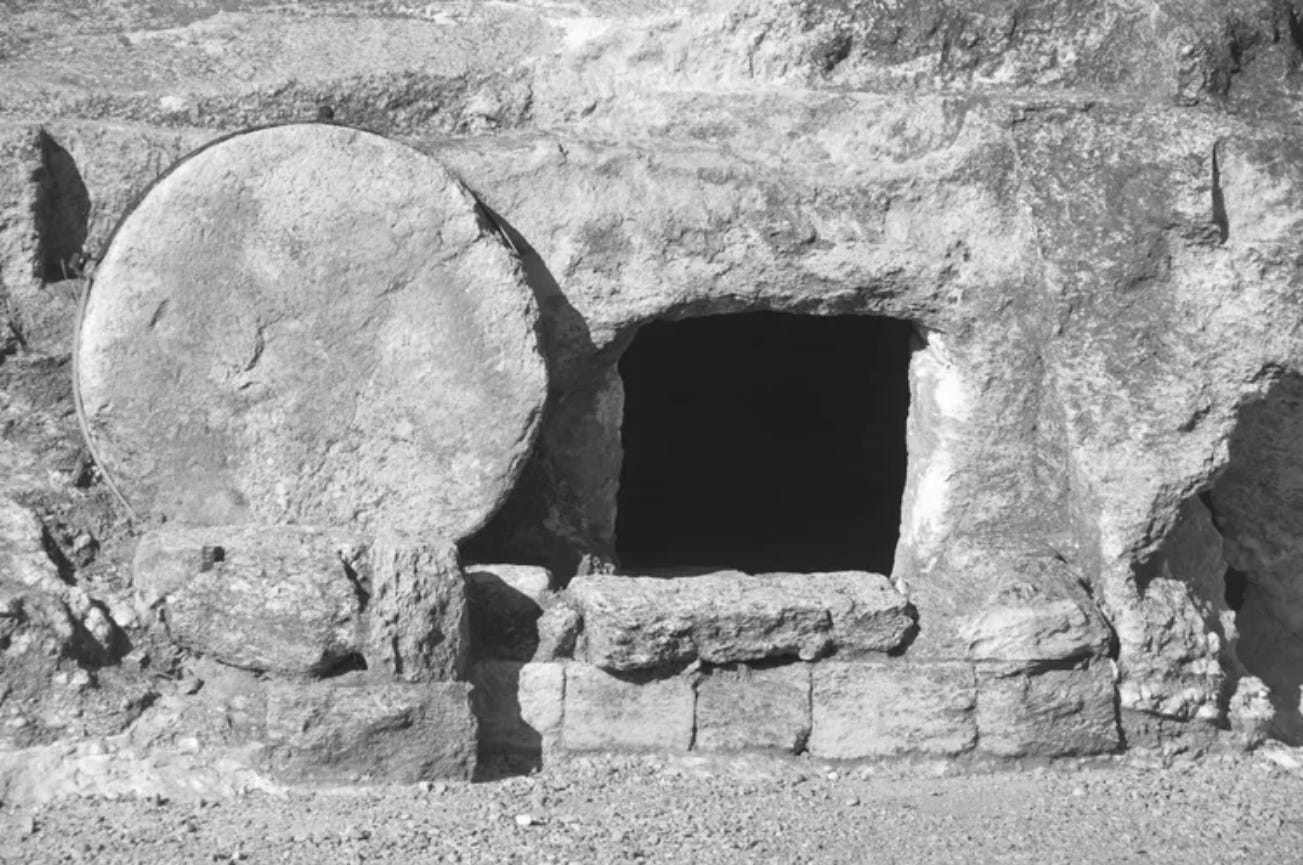
that Jesus of Nazareth actually rose from the dead on the third day after his crucifixion. I believe because of an actual event in history.
What Makes Christianity Different
When you step back and look at world religions, you'll find a lot of common elements. Sacred texts that claim divine inspiration. Stories of miracles and supernatural events. Ethical teachings about how to live a good life. Opportunities for spiritual experiences and personal transformation. Christianity has all of these things, but there's something else at its core that sets it apart from everything else.
Christianity doesn't just make claims about the spiritual realm or offer guidance for personal fulfillment. It makes a very specific claim about something that allegedly happened in human history. According to the earliest Christian sources, around 33 A.D. in Jerusalem, a Jewish teacher named Jesus of Nazareth was publicly executed by crucifixion under the Roman governor Pontius Pilate. Then, a few days later, his followers started boldly proclaiming that they had seen him alive again. They weren't talking about dreams or visions or feeling his presence spiritually. They claimed to have encountered him physically, in his actual body, multiple times, in different locations, with different groups of people.
Why This Matters Historically
Here's what makes this claim so interesting from a historical perspective: if someone actually came back to life after a public execution, that's not just a religious statement. That's a claim about something that either did or didn't happen in the real world. And when someone makes a claim about historical events, you can investigate it using the same tools historians use to examine any other ancient occurrence.
The early Christian movement didn't develop the way most religious movements do. There wasn't a charismatic leader who gradually built up a following over years and then passed his teachings on to disciples who carried on his legacy. Instead, you have this explosive, sudden emergence of a movement that started with a group of completely demoralized followers who had just watched their teacher die in the most shameful, public way imaginable under Roman law.
Something transformed these traumatized, scattered people into bold witnesses who were willing to face persecution and death for their testimony. They went from hiding in fear to proclaiming their message openly; despite knowing it would cost them everything. The question that fascinates me is… what could have caused such a dramatic transformation in such a short period of time?
The Cultural Context That Changes Everything
What really gets my attention is how the resurrection claim fits into the cultural and religious context of first-century Judaism. The idea of a crucified messiah was completely contradictory to everything Jewish people expected. The messiah was supposed to be a conquering king who would overthrow Roman oppression and establish God's kingdom on earth. To say that your leader had been crucified was essentially admitting that you had been following a failed revolutionary. Crucifixion was designed to be the most humiliating form of execution possible, reserved for the worst criminals and political insurgents.
For Jewish people of that time, resurrection wasn't some metaphorical concept about living on in memory or having your spirit continue after death. Resurrection meant a dead body coming back to life and walking out of a tomb. That's exactly what the early Christians claimed had happened to Jesus. They weren't speaking in spiritual metaphors or trying to find poetic ways to cope with grief. They were making very concrete, physical claims about what they said they had witnessed.
The Unlikely Witnesses
Another detail that strikes me as significant is who the gospel writers identify as the first witnesses to the resurrection. In that culture, women's testimony wasn't considered legally valid in court proceedings. If you were making up a story and wanted people to believe it, you would never claim that women were your primary witnesses. Yet that's exactly what all the gospel accounts do, and they don't try to downplay it or explain it away. They present it as a straightforward fact, even though it would have been seen as a weakness in their case rather than a strength.
The whole thing allegedly happened right there in Jerusalem, within walking distance of where Jesus had been buried. If the resurrection hadn't actually occurred, if his body was still in the tomb, anyone who wanted to disprove the claims could have simply produced the corpse. The religious authorities had every motivation to do so, since this new movement was threatening their established order. The Roman authorities would have been happy to squash what they saw as potential civil unrest. Yet despite having every reason and opportunity to present evidence that would have immediately ended the Christian movement, no one ever did.
The Historical Question
I want to be clear that none of this proves the resurrection in the same way you can prove a mathematical equation. Historical investigation doesn't work like that. You're always dealing with probabilities and competing explanations rather than absolute certainty. But that doesn't mean we're just guessing or that all explanations are equally valid.
When historians examine ancient events, they ask what explanation best accounts for all the available evidence. They look for theories that can explain not just one or two pieces of data, but the whole pattern of what we observe. When I apply that kind of thinking to the origins of Christianity, I find myself struggling to come up with alternative explanations that adequately account for everything we know.
The idea that it was all based on group hysteria or mass hallucinations doesn't explain the specific details of the accounts or the dramatic transformation of the witnesses. The theory that it was a later myth that developed over time doesn't fit with how quickly the movement spread or how early our sources are. The suggestion that the disciples stole the body and fabricated the whole thing doesn't explain why they would then be willing to suffer and die for what they knew was a lie.
What It All Comes Down To
I know how incredible this sounds to modern ears. We don't expect dead people to come back to life, and we shouldn't. That's exactly why the resurrection claim is so significant. If there really is a God who created the universe and everything in it, wouldn't you expect that God's direct intervention in human history might involve something that transcends the normal patterns of natural law?
This is what my faith ultimately rests on. I don't believe in Jesus primarily because the Bible tells me to, though I value Scripture deeply. I think the Bible exists because something so extraordinary happened in first-century Palestine that it compelled people who had every reason to remain silent to risk everything in order to tell the world about it.
When someone asks me why I still believe after all these years, through all the questions and doubts and intellectual challenges, this is where I always come back. I think Jesus of Nazareth actually walked out of that tomb two thousand years ago. And if that really happened, then everything else about reality is worth reconsidering in light of that fact. I always say…
If there was a dude in human history that figured out how to beat death…I’m interested.
Thanks so much for supporting this work. If you know someone who would value this reflection, you can use the share button below to send it their way.


Very cool. My grandmother explained it to me in very similar terms. She, her brother and father were deeply interested in history and archaeology, and the growing evidence concerning AD first century peoples that came to light in their lifetime. She said that as popular as Tv Guide was, no one remembered what was on the cover last week. And yet all this time later we’re still talking about occurrences in Jerusalem, a world away, this signifies much.
In her upbringing, the transactional nature of Christ’s sacrifice was taken as a given. These days, however, I have read of young people wondering how a resurrection eons ago “saves” them now. Have you ever written in such?